
Table of Contents
ToggleSMM vs. SEM: Which is the best digital marketing technique for your business?
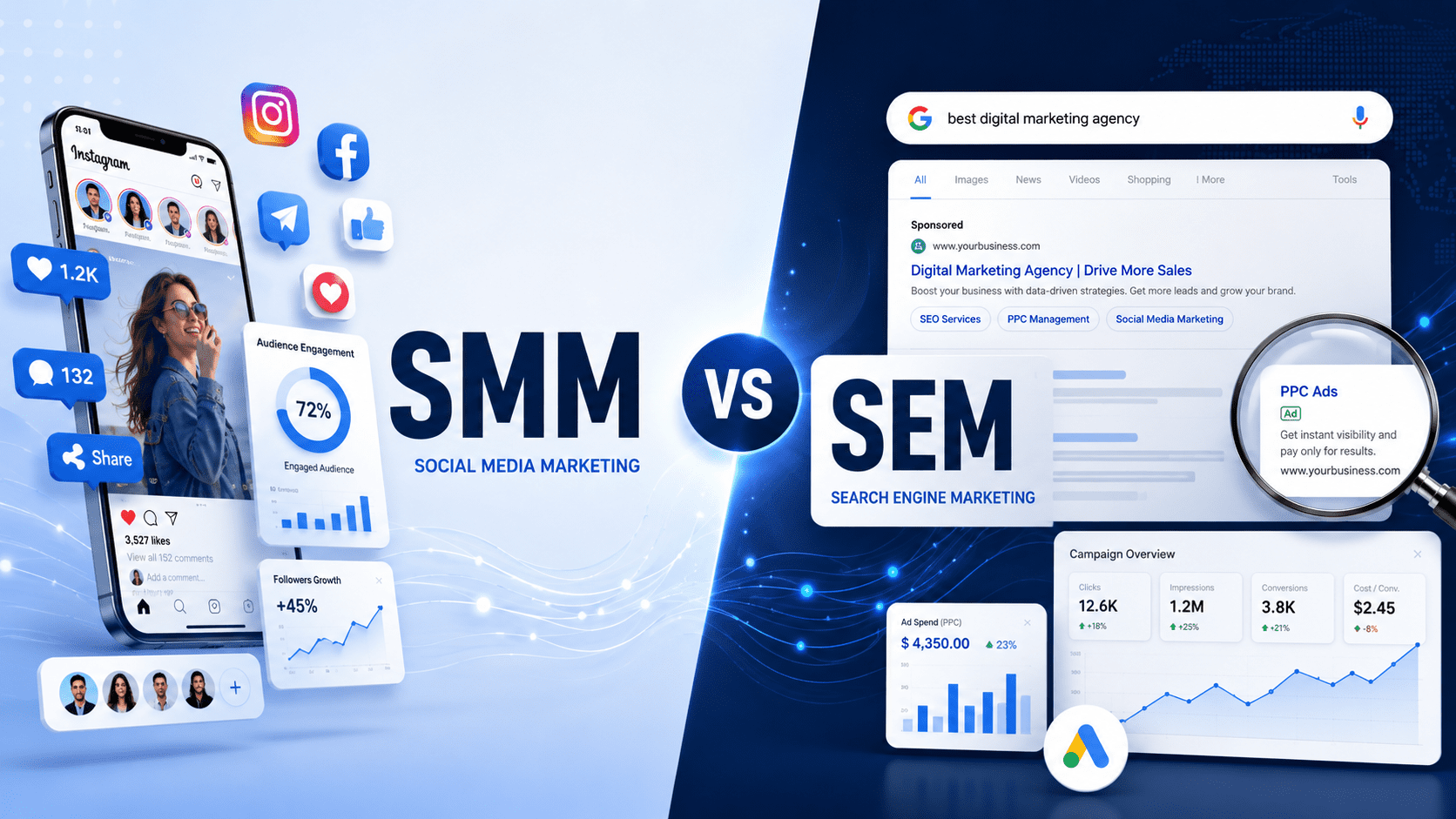
Every day millions of businesses have the same dilemma: Where do I spend my marketing dollars? There are two powerful, proven paths in the digital world—SMM vs. SEM—and choosing the wrong one can cost you time, investment, and growth.
Search engine marketing (SEM) may get your brand in front of consumers searching for what you sell. Social Media Marketing (SMM) strengthens your brand presence where your audience already spends hours every single day. Both are crucial foundations of modern digital marketing — yet they operate quite differently, have distinct purposes, and require different levels of investment.
So how do you choose? That depends on where you are in your business, your audience, your budget, and most crucially, what you’re attempting to accomplish. Whether you’re a startup attempting to generate your first leads, a developing brand cultivating a dedicated audience, or an established corporation maximizing every dollar of ad spend, understanding SEM versus SMM is the first step to a better digital strategy.
In our comprehensive guide, we break down both approaches step-by-step—with real-world statistics, expert perspectives, and straightforward, actionable guidance—so you can make an informed decision on the best route or, even better, how to combine both for the most effect.
Let’s get started.
Introduction: The $600 Billion Question
Imagine you have a small marketing budget and two roads in front of you. One brings you to Facebook, Instagram, and TikTok, the social hubs of the digital world. The other goes to Google, Bing, and Yahoo, where billions of consumers are searching for exactly what they need now.
Which way do you go?
That’s the underlying question behind the Social Media Marketing (SMM) vs. search engine marketing (SEM) argument—and it’s one of the most crucial considerations every digital marketer faces. Do it right and unlock exponential growth. Get it wrong and you will burn your budget with no results.
In this article you will get a clear, honest analysis of both techniques—what they are, how they operate, when to use each, and how to combine them for optimal ROI.
$600B+
Global digital ad spending in 2024
4.9 billion
World social media users
8.5 Billion
Google Searches/Day
What is SMM (Social Media Marketing)?
Social media marketing is the process of using social channels like Facebook, Instagram, LinkedIn, TikTok, Pinterest, and X (previously Twitter) to market your business, establish an audience, and drive traffic or sales.
Social media marketing operates in two main ways:
Organic SMM: Producing content (posts, reels, stories, threads) that grows your audience and engagement organically without paying for reach.
Sponsored SMM (Social Ads): Creating and running sponsored campaigns on social media platforms like Meta Ads, LinkedIn Ads, etc. to reach specific groups of people based on their demographics, interests, and behaviors.
Core components of SMM
- Creation and scheduling of content
- Community Management & Engagement
- Influencer partnerships and marketing
- Paid social media advertising
- Brand monitoring and social listening
- Performance Tracking and Analytics
"Social media is not an activity. It’s an investment of significant time and resources. Surround yourself with people that not only support you and stick by your side but also help you think of methods to WOW your online presence.”
Sean Gardner, Forbes Top Social Media Power Influencer
Search Engine Marketing (SEM) is the practice of getting traffic and visibility from search engines through paid ads. SEM is when someone types a query into Google or Bing and the ads show up at the top and bottom of the results page.
Google Ads (previously Google AdWords) is the most used SEM platform, followed by Microsoft Advertising (Bing Ads).
SEM principal components
- Keyword research and selection
- Pay-Per-Click (PPC) campaign management
- Ad copywriting & A/B testing
- Landing page optimization
- Improvement of Quality Score
- Budget management and bidding strategy
- Analytics & Conversion Tracking
Pro tip: SEM targets existing demand – people who are already looking for what you sell. Which makes it tremendously beneficial for firms offering products or services where there is clear search intent.
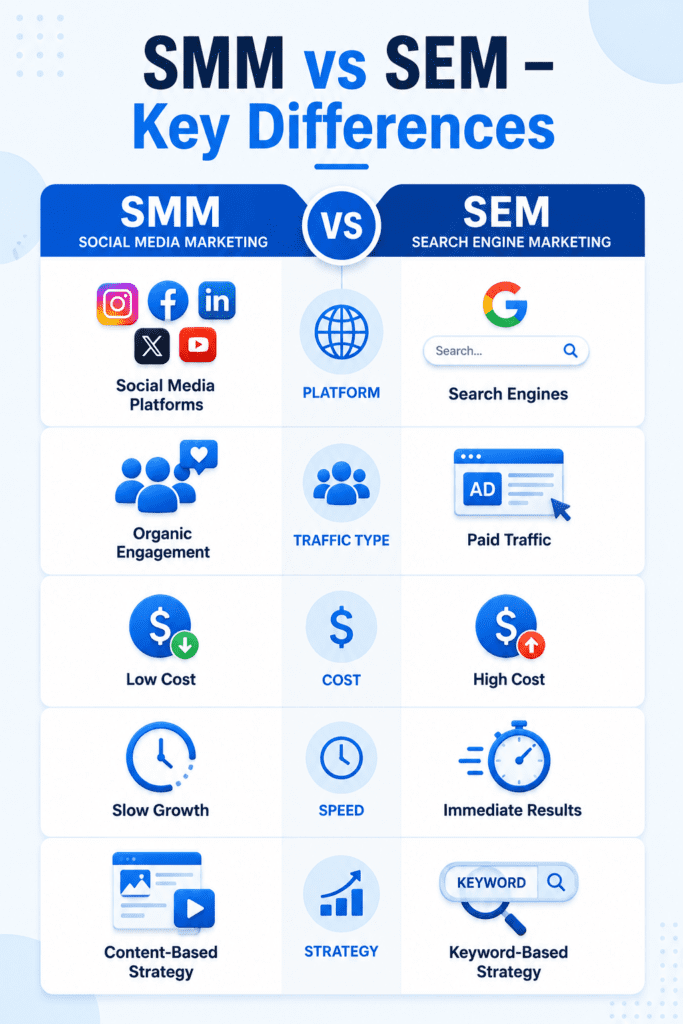
Major Differences Between SMM and SEM
Social Media Marketing (SMM) |
Discovery-based (passive browsing) |
Demographic, interest, behavior |
Images, video, stories, carousels |
Awareness & consideration |
CPM / CPC / CPL |
Medium (brand building takes time) |
High (community, brand equity) |
Search Engine Marketing (SEM) |
Intent-based (active searching) |
Keyword, location, device |
Text ads, shopping ads, display |
Consideration & conversion |
CPC / CPM / CPA |
Fast (ads go live immediately) |
Medium (stops when budget ends) |
Advantages of Social Media Marketing
SMM advantages
- Unmatched exposure for brands
- Deep targeting of audience.
- Shareable Content.
- Two-way customer engagement
- Economical for awareness
- Builds community for the long run
- Rich Media Ad Types
- Retargeting features
Advantages of SEM
- High intention draws purchasers.
- Immediate traffic and results
- Trackable Return on Investment
- Precise keyword targeting
- Local and international reach
- Scalable budgets
- Easily A/B test ad variations
- Data for competitive keywords
Your audience lives on social media. Average time spent on social platforms: Over 2.5 hours/day. That’s a big window to create brand recall, tell your story, speak to customers directly, and convert followers into loyal advocates. No other channel matches social media’s ability to humanize a brand.
Why SEM is so good at driving conversions
Someone typing “buy running shoes near me” on Google is ready to purchase. SEM puts your ad in front of that high-intent buyer at the right time. That’s why Google Ads consistently delivers some of the highest conversion rates in digital advertising — often outperforming social ads for direct-response campaigns — thanks to this intent-based targeting.
When to Use SEM versus SMM
There’s no universal winner—the right solution relies totally on your goals, budget, and business stage.
Opt for SMM if:
- You are building brand recognition from the start.
- Your product requires visual narrative (fashion, gastronomy, lifestyle)
- You want to build a loyal community over time.
- Your audience is engaged on social platforms (B2C brands especially). You’re on a shoestring budget and want organic reach.
- You’re launching influencer partnerships.
Use SEM if:
- You need immediate leads or sales. Your product has strong search demand (e.g., “emergency plumber” and “accounting software”).
- You are entering a competitive market and need fast visibility.
- You are running time-sensitive or seasonal campaigns.
- You want to hijack traffic from competitor keywords.
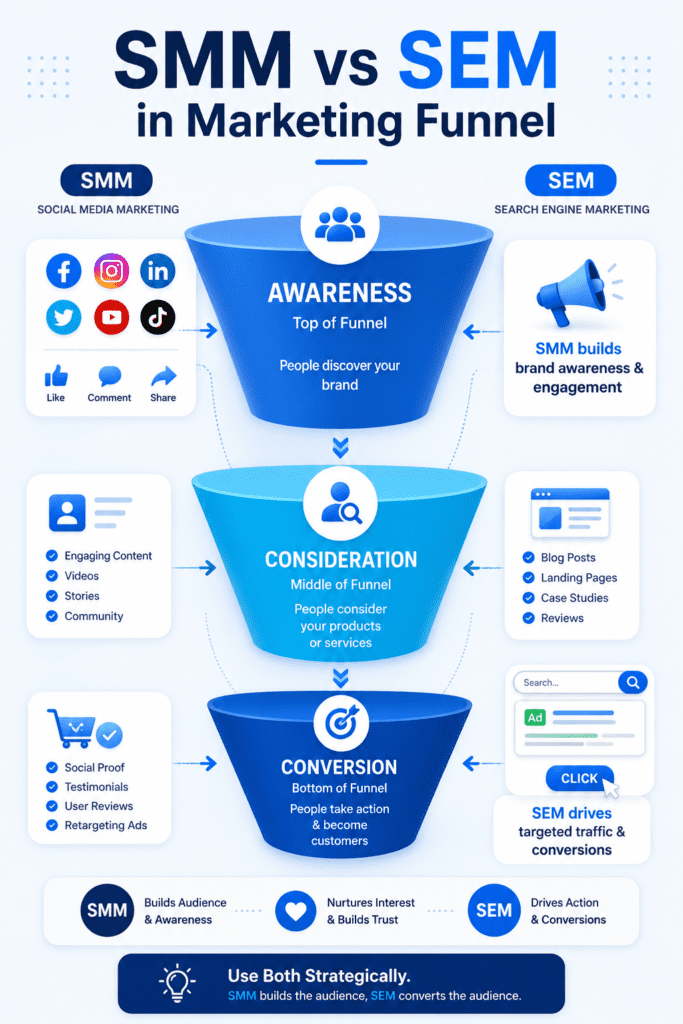
Best Practices: The best digital marketing strategies are those that use both channels together. Use SMM to warm up cold audiences and create brand recognition, then use SEM to catch them when they're ready to convert.
Cost Comparison and ROI Assessment
Budget is the decisive issue, generally. So let’s break down the real statistics.
SMM expenses
- Average Facebook CPC (Cost Per Click): $0.26–$0.97
- Instagram CPM (average cost per thousand impressions) ranges from $5 to $7.
- LinkedIn CPC (B2B): $5-$10+ (more expensive but the targeting is more professional)
- Organic SMM: Only time spent, no direct ad expense
SEM expense
- Average Google Ads CPC (all industries): $1-$2 (Search Network)
- Competitive industries (legal, finance, insurance): $50–$100+ per click
- Average Google Ads Conversion Rate: 3.75% (Search)
- Average ROI for Google Ads: $2 for every $1 spent (Google Economic Impact Report).
The key takeaway: SMM generally offers a lower entry cost and better brand equity returns. SEM offers faster, more measurable conversions but can get expensive in competitive markets. Track your cost per acquisition (CPA) on both channels to determine where to allocate budget.
Real-Life Examples and Case Studies
Airbnb (SMM success):
Much of Airbnb’s brand was created on Instagram and user-generated content. They developed a viral content engine that created millions in free advertising by encouraging hosts and guests to share their experiences on social media with branded hashtags. This SMM-first approach built trust and community before they went all-in on paid search—showing the power of social media as a long-term brand asset.
Local Law Firm (Case Study) SEM Results:
A medium-sized personal injury law practice in Chicago spent $5,000/month on Google Ads using phrases like “car accident lawyer Chicago” and “personal injury attorney near me.” Within 3 months they were generating 15-20 qualifying leads per month with a cost per lead of about $250, which was far less than traditional advertising. SEM’s intent-based targeting made it appropriate for a service consumers seek in instances of critical need.
Glossier (Combined Method):
Beauty startup Glossier used Instagram to establish a cult following of 3M+ before moving into Google Ads. Their SEM campaigns were helped by branded searches. Consumers Googling “Glossier moisturizer” were already warm leads, achieved by first building community and brand loyalty through SMM. Their combined approach delivered lower acquisition costs and higher conversion rates across both channels.
Common SEM mistakes
Keyword bidding on irrelevant phrases, not using negative keywords, directing ad traffic to the homepage instead of a landing page, not tracking conversions, and not optimizing campaigns.
The biggest of all mistakes:
SMM vs. SEM: two sides of the same coin. Many companies put all their eggs in one basket and ignore the others, missing out on major development potential. A varied digital approach nearly always trumps a compartmentalized one.
Upcoming Trends in Digital Marketing
The scene is shifting swiftly. Here are the trends that will impact SMM and SEM in the next years:
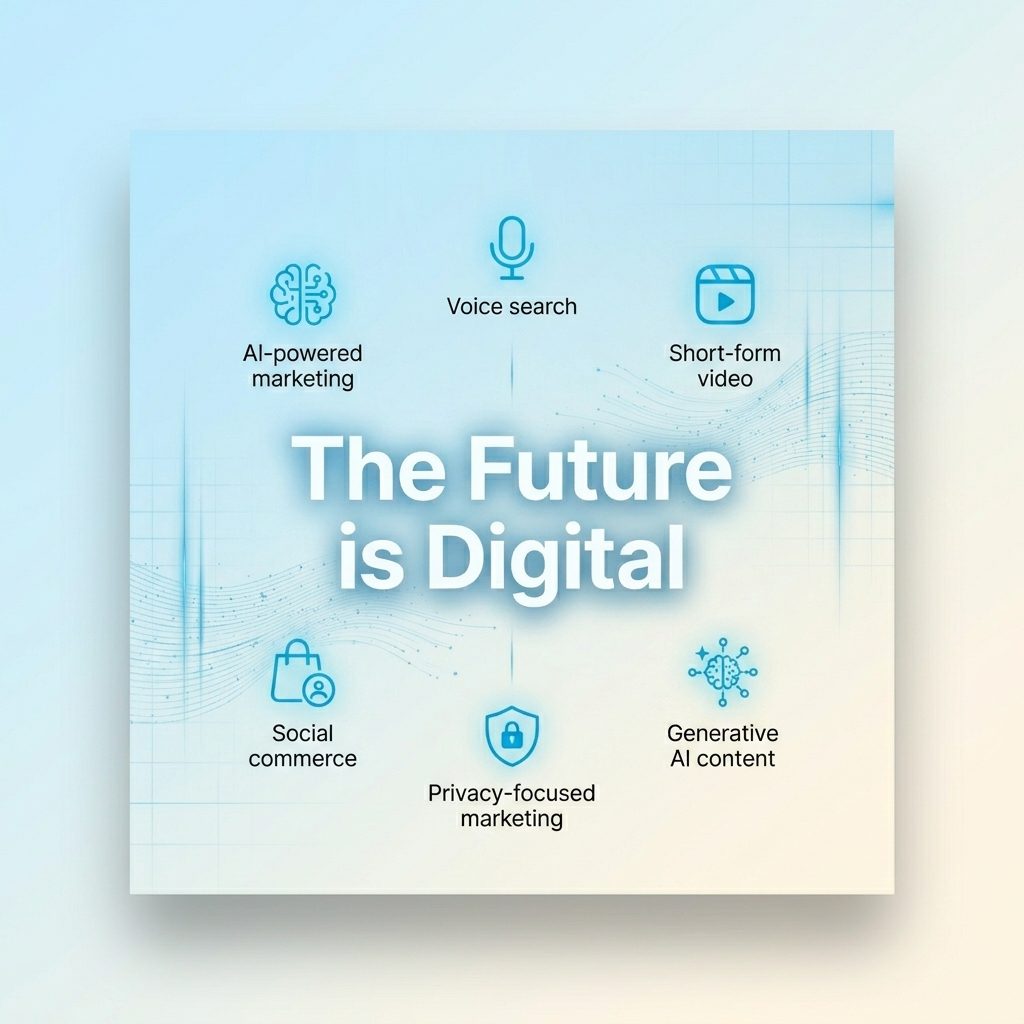
- AI-powered ad optimization: Google’s Performance Max and Meta’s Advantage+ campaigns leverage machine learning to automate targeting, bids, and creatives.
- Short-form video domination: TikTok, Instagram Reels, and YouTube Shorts are changing the SMM content strategy. Brands that nail vertical video will win the coming decade.
- Voice search and conversational SEM: With the advent of smart speakers and AI helpers, natural language query optimization is an SEM must.
- Social commerce explosion: Instagram Shops, TikTok Shop, and Pinterest Shopping is blurring the barrier between social media and e-commerce.
- Privacy-centric marketing: With cookie deprecation and iOS privacy changes, SMM and SEM are both moving toward first-party data approaches.
- Generative AI in content and ads: AI technologies are expediting ad creative production across both channels, decreasing the barrier to high-quality campaigns.
Conclusion: Which One To Choose?
Neither social media marketing nor search engine marketing has a single victor—only the proper plan for your goals. If you want to develop brand awareness, grow a community, and engage emotionally with your audience, lean into SMM. Invest in SEM for fast leads, conversions, and demonstrable ROI from those actively searching for your solution.
"Social media marketing is your long-term game for building trust, engagement, and brand identity, while search engine marketing is your fast-track solution for driving immediate visibility and conversions. The smartest strategy isn’t choosing one over the other—it's knowing when and how to use both together for maximum results."
Ready to take your digital growth to the next level? Understanding the difference between SMM vs. SEM is just the beginning—executing the right strategy is what truly drives results. Whether you want to build a strong brand through social media marketing or generate instant, targeted traffic with search engine marketing, having the right team makes all the difference.
Don’t leave your growth to guesswork. Partner with a professional marketing team that knows how to combine data, creativity, and strategy to deliver measurable success. Visit www.nexurasight.com and start scaling your business today with expert-driven SMM and SEM strategies designed for real impact.
Writer : Zaina Nawaz
LEAD DIGITAL STRATEGIST