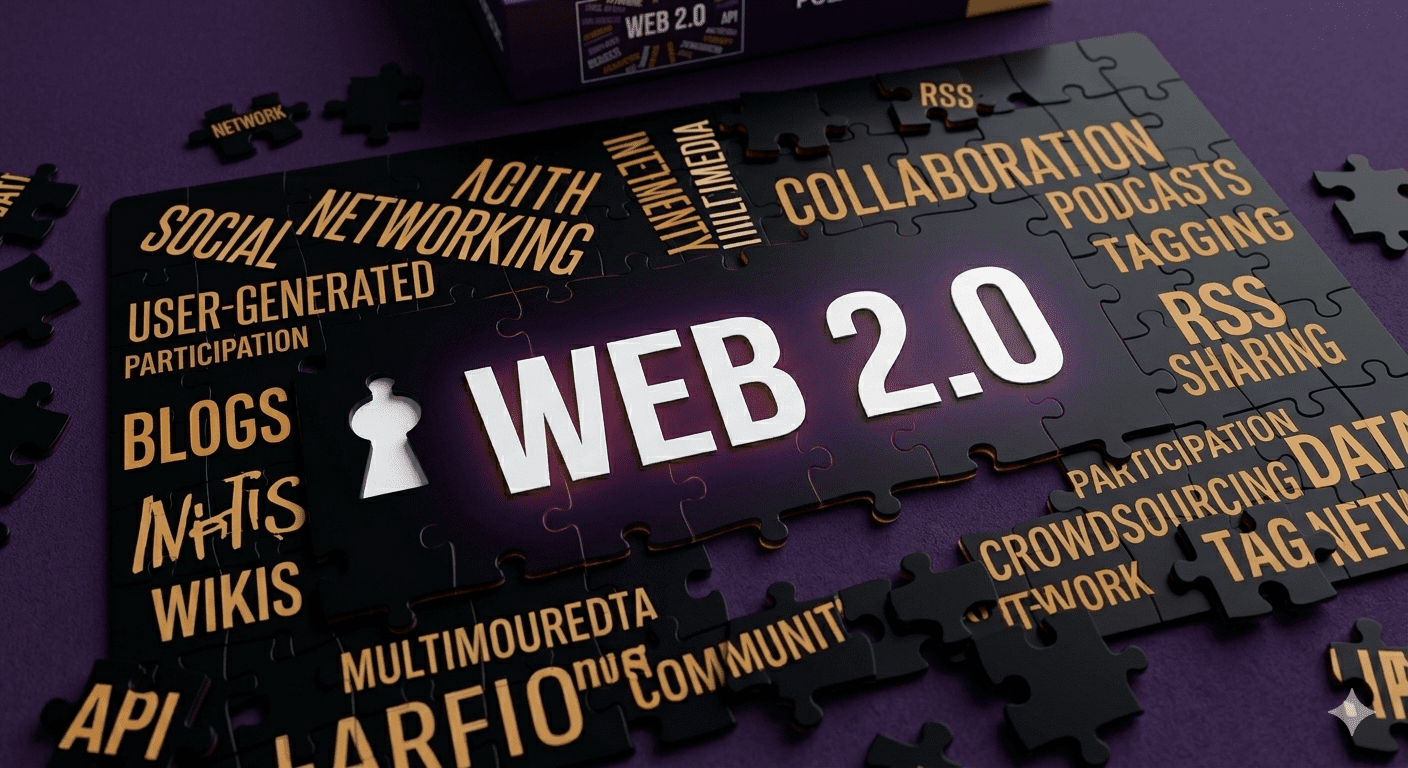
The evolution of the internet is generally broken down into distinct eras.A decentralised Web3 is anticipated in the future, since Web1.0 was a static “read-only” framework. Web2.0, the highly interactive “read-write” web that we use on a daily basis, is located right in the middle.If you have ever left a comment on a post, uploaded a video, bought something from an online marketplace, or scrolled through social media, you are actively participating in Web 2.0. It completely altered our digital landscape, making us active creators rather than passive consumers.
Table of Contents
Toggle1.What is web2.0?
The majority of the internet was composed of flat, static HTML pages in the early days of Web1.0. Regular people used the internet to find information, but they were unable to contribute or engage with it. With the introduction of dynamic, user-generated content and collaborative virtual spaces, social web transformed the internet from a digital billboard into a dynamic, two-way street.
The term Web2.0 does not refer to a technical modification of the internet’s core infrastructure. Instead, “it describes a massive shift in how people use the internet.”
2. Four Pillars That Drive Web2.0 Platforms
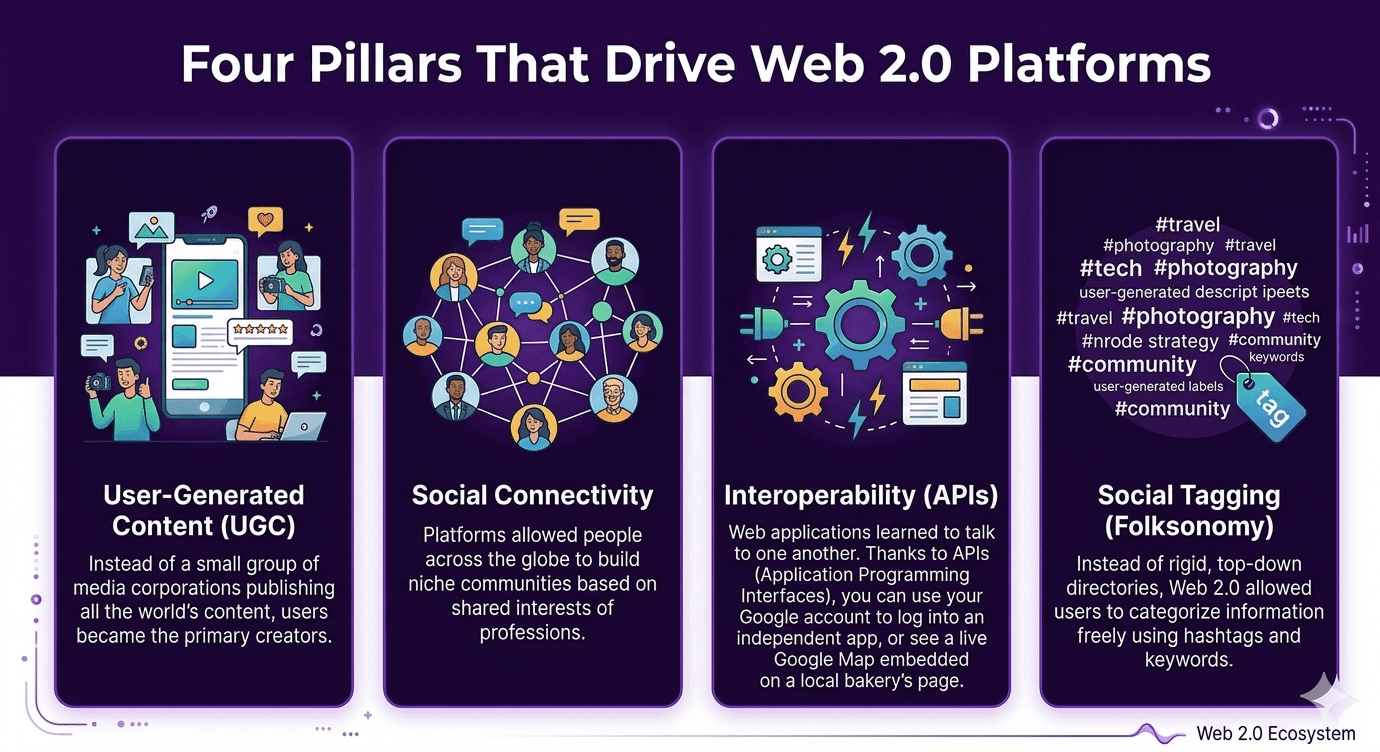
Web2.0 succeeded because it stripped away the technical barriers to entry. It made the internet accessible to people who did not know a single line of code. This modern ecosystem relies on four core pillars:
- User-Generated Content (UGC):
Instead of a small group of media corporations publishing all the world’s content, users became the primary creators.
- Social Connectivity:
Platforms allowed people across the globe to build niche communities based on shared interests or professions.
- Interoperability (APIs):
Web applications learned to talk to one another. Thanks to APIs (Application Programming Interfaces), you can use your Google account to log into an independent app, or see a live Google Map embedded on a local bakery’s page.
- Social Tagging (Folksonomy):
Instead of rigid, top-down directories, Web2.0 allowed users to categorize information freely using hashtags and keywords.
3.The Modern SEO Twist: Web2.0 as a Strategy
“Web2.0” has also acquired a second, very specialised connotation in the context of SEO and digital marketing. Social web submission sites are often used by marketers to refer to high-authority platforms (like WordPress.com, Blogger, or Medium) where anyone can create a free blog or mini-website.
Because these massive platforms already possess incredible authority in search engine algorithms, creators use them to publish supporting articles. By linking back to a main business website, these articles help boost organic search rankings and drive target referral traffic.
"Web 2.0 focuses heavily on user interaction, social networking, and collaborative culture."
4.The Trade-Off: Convenience vs. Centralization
While Web2.0 democratized speech and made global connection instantaneous, it came with a significant catch: centralization.A small number of tech firms control the great bulk of user data, advertising income, and modern internet traffic.Users give up their privacy, digital footprints, and personal information in return for free, highly seamless software. The current movement toward Web3, a concept that aims to leverage blockchain technology to reclaim power from corporations and return data ownership to individuals, was spurred by this very tension.
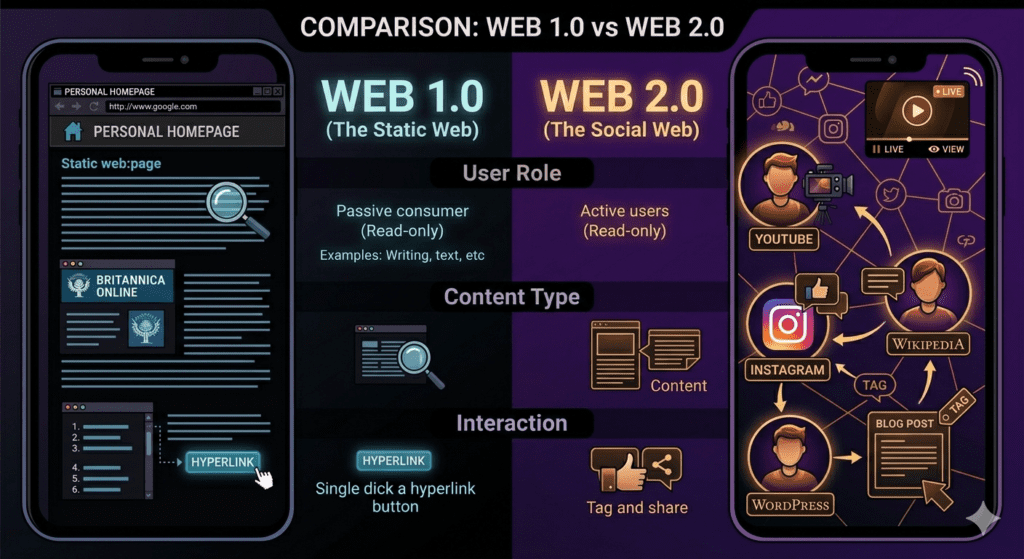
5.How Web2.0 Differs From Web1.0?
The data outlines the evolution of the internet from Web 1.0 to Web 2.0, highlighting a fundamental shift in user behavior and technology:
6. The Lasting Legacy of the Social Web2.0
Web2.0 completely reshaped modern society. It gave a global megaphone to everyday creators, birthed entirely new remote industries, and fundamentally changed how we communicate, work, and shop. While the tech world keeps its eyes firmly on what comes next, the collaborative, dynamic spirit of social web remains the absolute bedrock of our digital lives.
Writer: Sajiha Naaz Fatima
Content writer