
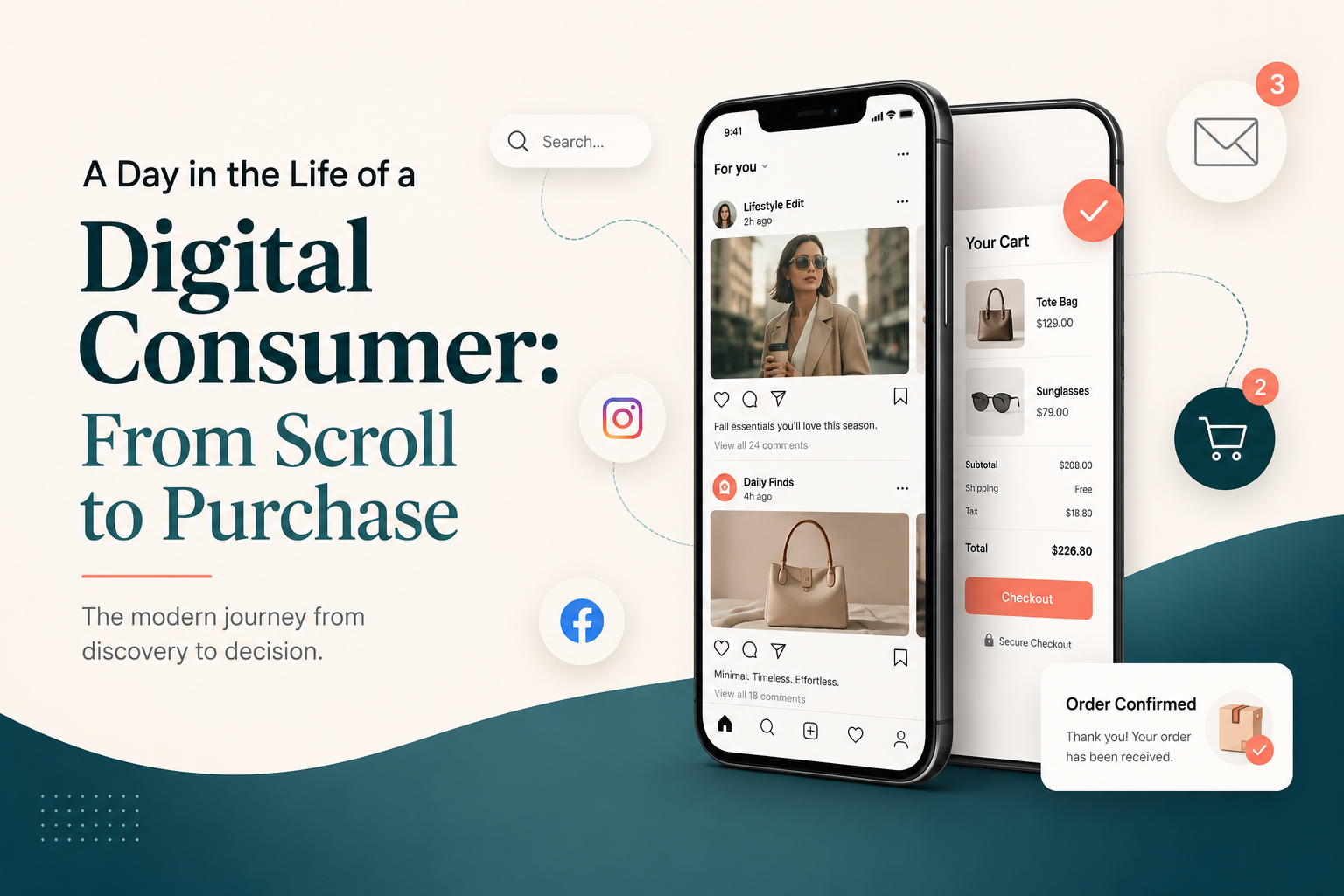
Come on, you’ve put something in your cart at 11pm, just mindlessly scrolling through Instagram, yeah? That “random” purchase was not a random purchase. It was what a carefully orchestrated digital consumer journey looked like in real time.
From the first Reel you double-tap to that confirmation email landing in your inbox, every step is a touchpoint created by marketers who understand how today’s consumers think, browse, and buy. And the wild thing? Most people are not even aware of it happening.
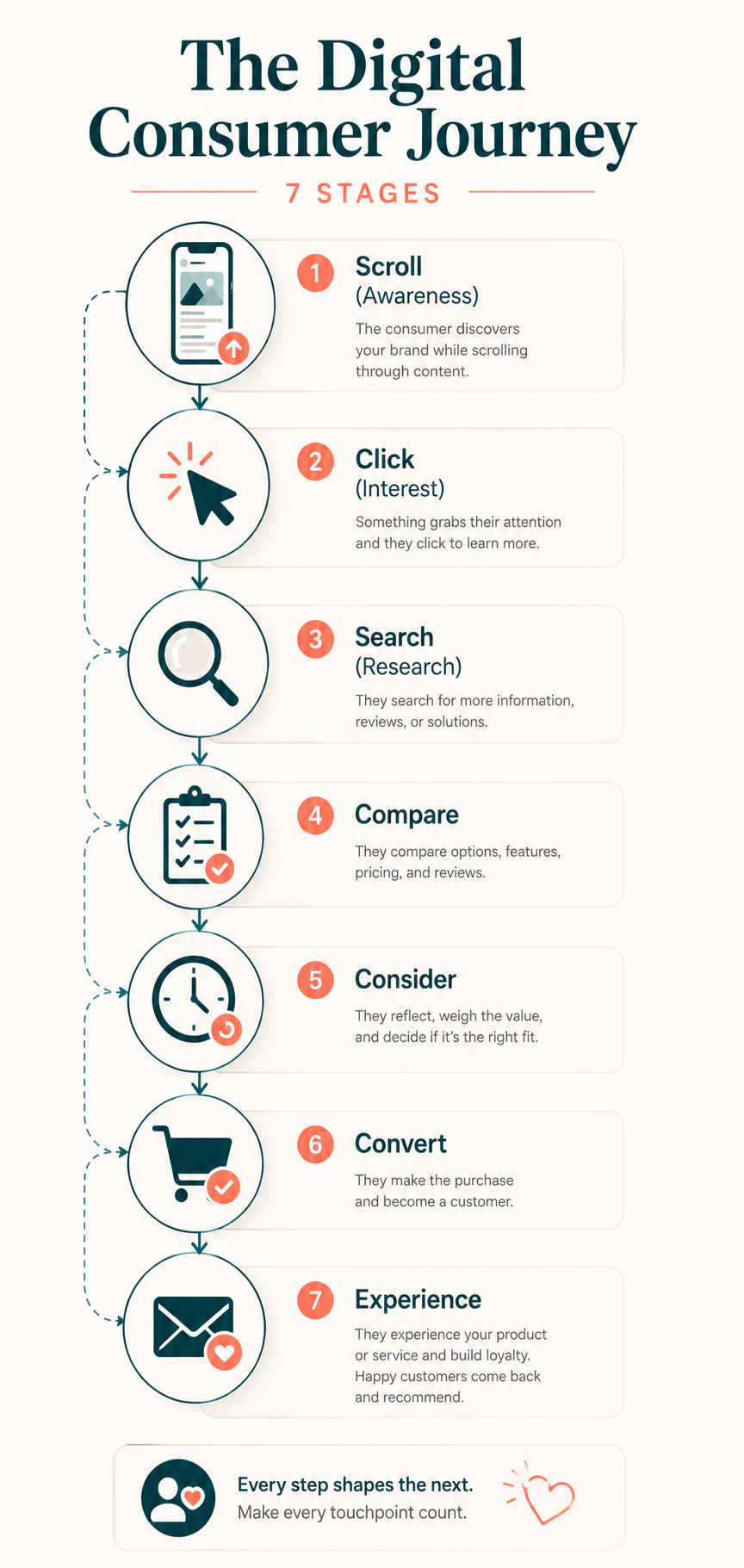
In this blog, we’re breaking down the 7 stages of the digital consumer journey—what’s going on in the user’s head at each point, and what smart marketers do to move them closer to that “Buy Now” button. If you’re a digital marketer looking to level up, a small business owner trying to grow online, or just someone wondering why you keep buying stuff you didn’t plan to buy—this one’s for you.
Understanding the digital consumer journey has never been more important. Every brand competing for attention online needs to know exactly how a stranger becomes a buyer—and how a buyer becomes a loyal fan.
Table of Contents
ToggleStage 1: The Scroll — Where the Digital Consumer Journey Begins
(Awareness — Social Media Marketing)
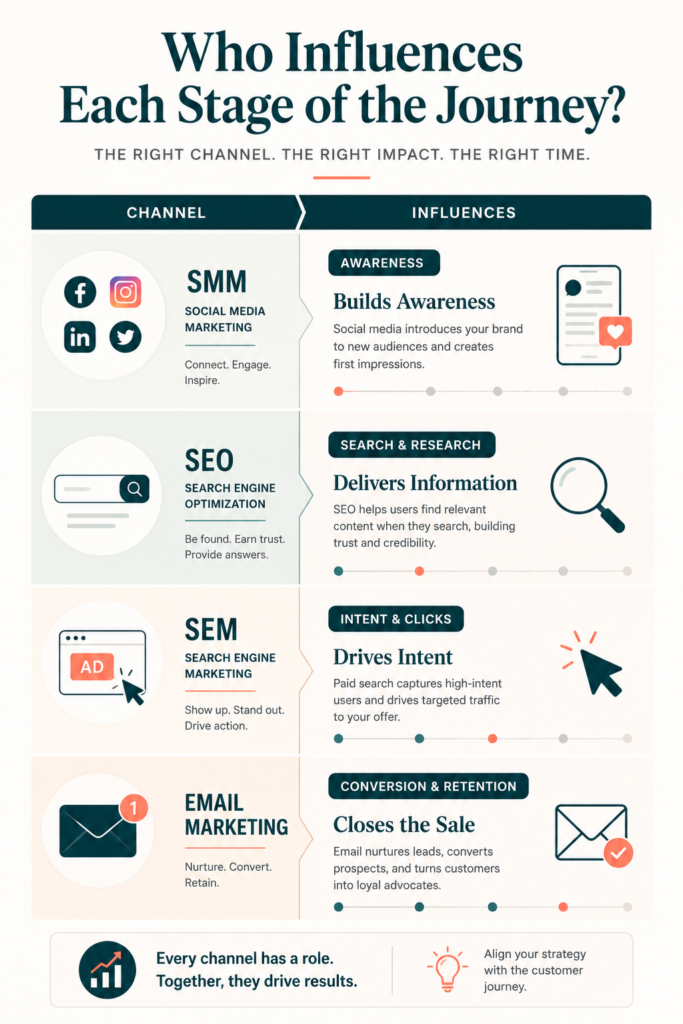
Ever noticed how a product you’ve never consciously searched for suddenly appears on your feed—and looks exactly like something you needed? That’s not magic. That’s SMM doing its job with surgical precision.
The consumer at this point is not looking to purchase anything. They are just scrolling. Between meetings, on the bus, killing time, dodging sleep. But their brain is passively taking in content. A beautiful Reel, a meme they can relate to connected to a product, or a UGC post from someone they follow—these sow the seed of awareness.
- What the user thinks:
“Hmm, looks interesting. Never seen that before.” They don’t shop. And they are noticing.
- What marketers should do:
Invest in thumb-stopping content. Use platform-native formats—Reels, TikToks, and Shorts. Target based on interests and lookalike audiences, not just demographics.
Mini insight: In the awareness stage, emotion always trumps information. Never sell the product. Sell the feeling.
Stage 2: The Curiosity Click – Further on the Journey
(Disclose)
This is when it gets interesting. The user tapped because they liked what they saw. Perhaps they clicked on a link in the bio, watched the entire video, or visited a profile. This micro-action is highly undervalued in the consumer journey.
The click of interest is focused. Not buying intent, but research intent. The consumer wants to learn more yet not make a decision. This is the brand’s last chance to establish a first impression.
This moment is a turning point in the customer journey. The consumer has moved from passive scrolling to active interest—and that shift changes everything about how you should communicate with them
- What the user is thinking:
“Let’s see what this is all about.” They’re judging vibes, trust signals, and credibility—and they’re doing it in approximately 3 seconds.
- What marketers need to do:
Make your landing page or bio link faster and easier. Use what the user is thinking: “Let me see what this is all about. They’re reading the vibes and trust cues. What marketers should do: Accelerate and clarify your landing page or bio link. Immediately employ social proof: reviews, follower numbers, press mentions. Steer, not kill.
(Research – SEO + SEM)
And then the magic happens. The consumer turns to Google after the first click. They type in something like “best wireless earbuds under $50” or “[brand name] reviews.” This is the search moment—and it’s where SEO and SEM are vitally essential.
Organic search results (SEO) and paid ads (SEM) vie for this consumer’s attention at the same moment they are actively searching. The statistics on internet shopping habits don’t lie: 81% of buyers explore online before they buy. If you miss this step, you lose to a competitor who showed up.
- The user’s thought process:
“I’ll do a quick search first. They are researching, evaluating choices, and looking for affirmation.
- What marketers need to do:
Rank for buyer-intent keywords with SEO. Run tailored SEM campaigns for high-intent queries. Ensure that your Google Business profile, reviews, and product pages are fully optimized.
Mini insight: Target long-tail keywords that match customer intent. "Best running shoes for flat feet" converts far better than just "running shoes."
Stage 4: The Comparison Phase When the Consumer Gets Strategic
The consumer has two or three options in mind now. They’re pulling up tabs, comparing costs, reading Reddit discussions at midnight, watching YouTube reviews, scouring every star rating they can get their hands on. This is the whole customer decision process in action.
And in the meantime, retargeting advertising from Stages 1 & 2 stealthily trails them around the internet. They get served ads on Facebook for the exact thing they just googled. That’s not creepy. That’s the convergence of SEO, SMM, and SEM functioning flawlessly.
Today’s online buying behavior is driven by social validation as much as price. People don’t just compare specs—they compare communities, creator endorsements, and comment sections. A brand with 500 passionate micro-reviews will often beat one with a bigger ad budget and a polished website.
- What the user is thinking:
“Which one will get me the most value? Who can I trust?” They are using rationality to back up their gut feelings.
- What marketers must do:
Create comparison content: blog entries, YouTube videos, and comparison landing sites. Go for retargeting advertisements. Clearly and early, emphasize your unique value proposition.
Stage 5: The Consideration Pause The Silent Drop-Off Zone
Here’s a stage most brands simply ignore—and it kills their conversions. Then, after all the research and comparison, the consumer takes a break. Life happens. The tab is closed. The product is forgotten in a cart.
This delay can last hours, days, or even weeks. Here’s a massive leak in the online scroll to buy funnel. Doubt comes in. Is it too much? Really? This is necessary for me? And if it doesn’t work?
- What the user is thinking:
“I’ll just wait, I guess.” This is decision fatigue and financial hesitation and anxiety of making the wrong choice all wrapped up into one.
- What marketers should consider:
Employ urgency techniques like limited-time deals, low stock indicators, and social proof pop-ups. Use retargeting ads that directly answer complaints. Simplify the checkout process to eliminate friction.
(Conversion – Email Marketing)
And then it happens. The e-mail. Subject line: “Hey, you forgot something 👀”
The abandoned cart email is one of the highest-converting assets in digital marketing and a wonderful example of what email marketing does best: reaching the consumer at the appropriate moment, with the correct message, in a personal channel. On average, abandoned cart emails are opened about 45% of the time. That is a huge number compared to regular campaigns.
But email’s involvement in the conversion marketing funnel doesn’t stop at cart recovery. Welcome sequences, nurturing flows, flash sale notifications, and individualized product recommendations all push the cautious buyer over the finish line.
- What the user is thinking:
“Oh right, I forgot about that.” The email is a gentle reminder, coming at the right time, removing the friction of having to search again.
- What marketers need to do:
Build automated cart abandonment flows. Make subject lines your own. Add a small discount or free shipping to seal the deal. Test send times – Tuesday and Thursday mornings tend to do better.
Stage 7: The Post-Purchase Experience :The Stage That Builds Loyal Customers
(Retention)
Purchase. Trip over? Not by a long shot.
The post-purchase phase is where brands create or destroy a devoted customer. A confirmation email, a thank you to you, an update about the status of your order, a “you might also like”—these are not merely logistics. The phases of the marketing funnel that loop the customer into a new journey as a warm and engaged lead.
It’s always cheaper to keep a customer than get one, yet that’s always deprioritized.
- User’s thought:
“Was it worth it?” They are subconsciously looking for validation that they made the right choice.
- What marketers should do:
Send a nice confirmation email right away. Follow up with value-added content—how-to instructions and usage advice. Request for a review 3 to 5 days after delivery. Register them in a loyalty or rewards program.
Real Story: Meet Sara One Day in the Digital Consumer Journey
Join us as we follow Sara, a 24-year-old marketing assistant, through a perfectly typical Tuesday that culminates with an unplanned purchase.
- 7:42 a.m. – The Scroll. Sara’s on Instagram before she’s even completely awake from the alarm. She sees a video from a skincare brand. The package is beautiful. She watches it two times.
- 8:15 a.m. – The Click of Curiosity. She clicks on the brand’s profile on the commute. Clean feed, 4.8-star average, true testimonials She put a bookmark in it.
- 12:30 PM — The Search Moment At lunch, Sara Googles “best vitamin C serum for oily skin.” The brand appears in both organic results and a paid ad. She taps the organic result. Trust gained.
- 1:10 PM – The Comparison Phase. She looks over two rivals. A retargeting ad for the original brand pops up in her Facebook feed. The brand has 3x the reviews and a blog article with a comparison that settles it. Wins for the brand.
- 3:00 PM – The Pause for Consideration. She adds it to her cart and closes the tab. Work is busy. The price was a little expensive.
- 6:45 PM – The Conversion Trigger. An email lands: “Sara, you left something glowing behind—here’s 15% off to seal the deal.” She opens it, clicks, and checks out in less than 2 minutes.
The Next Week—Post-Purchase. Her order includes a handwritten note. A follow-up email explains how to layer serums correctly. She leaves a 5-star review and posts the brand to her stories. The cycle repeats – this time for her followers.
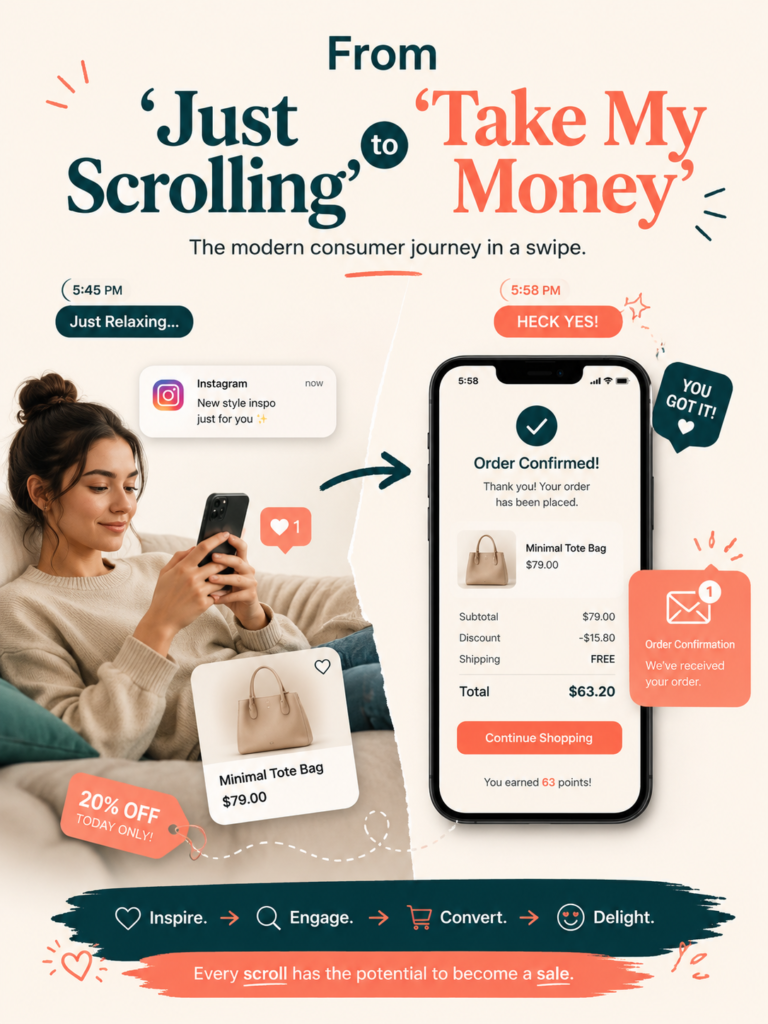
Conclusion: The Funnel Is a Conversation
The current digital consumer journey is not a funnel you shove people down into. It’s a discussion you conduct with them across many platforms, spanning time, meeting them where they are in their decision-making process.
Find Better with SEO. SMM makes you unforgettable. SEM catches intent. Email fosters relationships. Post-purchase experience builds champions. If you take out any one of these, the whole system shuts down.The brands that succeed today are not the loudest; they are the most present, most consistent, and most human at every point of the journey. The finest marketing isn’t marketing—it’s the universe giving you exactly what you needed, right when you needed it.”
"Ready to map your own winning funnel? NexuraSight helps businesses understand every stage of the digital consumer journey—so you can show up smarter, convert faster, and retain longer. Don't leave your marketing strategy to guesswork. Explore NexuraSight today."
Written by: Zaina Nawaz
Lead Digital Strategist